
A Brief History of Valparaiso Commandery No. 28, Knights Templar
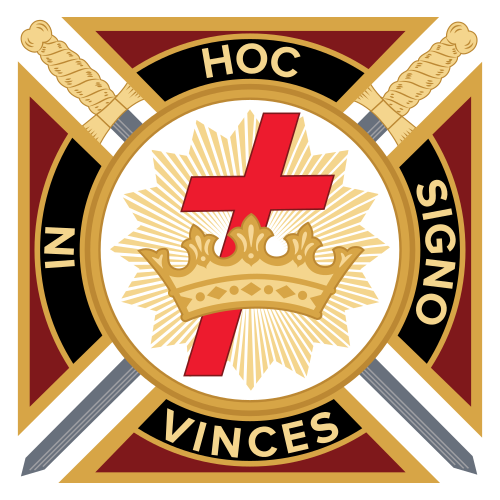
A Sesquicentennial History of Christian Chivalry in Porter County
Among the many Masonic organizations that have flourished in Northwest Indiana, few can claim a richer legacy than Valparaiso Commandery No. 28, Knights Templar. For 150 years, the Commandery has served as a guardian of Christian Masonry, a custodian of ancient chivalric traditions, and a place where generations of Sir Knights have pledged themselves to the defense of faith, truth, and virtue.
Its story is inseparably linked with the growth of Valparaiso itself and with the development of York Rite Masonry throughout Porter County.
The Growth of Masonry in Valparaiso
By the 1870s, Valparaiso had become one of the most important communities in northern Indiana. The county seat was prospering, railroads connected the region to Chicago and the East, and Freemasonry was thriving.
The brethren of Porter Lodge and the newly established Royal Arch Chapter had become increasingly interested in completing the York Rite journey. Across Indiana, Commanderies of Knights Templar were being organized as Master Masons sought the Christian and chivalric culmination of the York Rite system.
Recognizing the need for a local Commandery, several distinguished Masons petitioned the Grand Commandery of Indiana for authority to establish a Commandery in Valparaiso.
On May 11, 1876, a dispensation was granted authorizing the formation of Valparaiso Commandery. Less than a year later, on April 25, 1877, the Grand Commandery issued its permanent charter, officially creating Valparaiso Commandery No. 28. The charter bore the signature of Grand Commander Ervilla B. Bishop and secured the Commandery's place in Indiana Masonic history.
The Charter Officers
The founders of Valparaiso Commandery represented some of the most respected citizens of Porter County. The charter officers were:
- Sir Knight John Eason, Eminent Commander
- Sir Knight Simeon Pierce, Generalissimo
- Sir Knight James M. McGill, Captain General
- Sir Knight F. F. B. Coffin, Prelate
- Sir Knight John D. Wilson, Senior Warden
- Sir Knight Samuel A. Campbell, Junior Warden
- Sir Knight S. R. Bryant, Treasurer
- Sir Knight Albert E. Letts, Recorder
- Sir Knight John McCormick, Standard Bearer
- Sir Knight R. C. Wadge, Sword Bearer
- Sir Knight Marquis L. McClelland, Warden
- Sir Knight Allen R. Nichols, Sentinel.
These men established a tradition of excellence that would guide the Commandery through the next century and a half.
Early Meeting Places
The original home of Valparaiso Commandery was located in a hall on the third floor of a building at the northwest corner of Main and Lafayette Streets in downtown Valparaiso. From this modest but dignified setting, the Sir Knights met to conduct their business and confer the Orders of Christian Knighthood.
According to a 1936 history of the Commandery published by The Vidette-Messenger, the Commandery's original meeting hall at the northwest corner of Main and Lafayette Streets was destroyed by fire in January 1886, after which the Sir Knights relocated to the Academy Block. Like many fraternal organizations of the era, the Commandery faced the challenge of rebuilding and continuing its work after losing its home.
The Sir Knights responded with determination. Soon after the fire, the Commandery relocated to quarters in the Academy Block, where it continued its regular meetings and preserved the continuity of its traditions. This building also burned in 1926, shortly after Valparaiso had moved to their current home where they still operate today.
Participation in National Templary
From its earliest years, Valparaiso Commandery was active beyond the borders of Porter County.
Evidence survives showing members attending the 20th Triennial Conclave of the Grand Encampment of Knights Templar in Cleveland, Ohio, in 1877—the same year the Commandery received its charter. A surviving ribbon from that conclave identifies Sir Knight Elias N. Thomas of Valparaiso Commandery No. 28, demonstrating that the young Commandery was already participating in national Templar activities.
Such participation connected Valparaiso's Sir Knights with the larger Templar movement in America and helped establish the Commandery's reputation throughout the jurisdiction.
The Golden Age of Fraternalism
The late nineteenth and early twentieth centuries were often called the Golden Age of Fraternalism in America. During this period, membership in organizations such as the Masons, Odd Fellows, Elks, and Knights of Pythias became an important part of civic life.
Valparaiso Commandery benefited from this growth. By January 1, 1912, membership had reached 105 Sir Knights, a remarkable number for a community the size of Valparaiso. The Commandery attracted businessmen, attorneys, educators, elected officials, and community leaders who sought fellowship, moral instruction, and opportunities for service.
The Commandery became an important part of a growing York Rite family that included Royal Arch Masonry and, later, Cryptic Masonry. Together these bodies provided Master Masons with a complete York Rite experience in Valparaiso.
The Orders of Christian Knighthood
Unlike other branches of Freemasonry that admit men of many faith traditions, Knights Templar Masonry has historically required its members to profess the Christian faith. Through the Orders of the Red Cross, Malta, and the Temple, candidates are taught lessons of truth, sacrifice, fidelity, and Christian discipleship.
For generations of Porter County Masons, these Orders have represented the culmination of the York Rite journey.
Within the asylum of Valparaiso Commandery, countless Sir Knights have knelt at the altar and assumed the vows of Christian knighthood. Many would later go on to serve as Eminent Commanders, district officers, and leaders within the Grand Commandery of Indiana.
Service to Community and Country
Throughout its history, Valparaiso Commandery has emphasized public service and patriotism.
The Commandery has participated in numerous civic observances, memorial ceremonies, and veterans' programs. In recent years, Sir Knights of Valparaiso Commandery have presented the traditional Folding of the Flag Ceremony at veterans' events and memorial programs throughout Northwest Indiana, continuing a long-standing Templar commitment to honoring military service and preserving patriotic values.
This spirit of service reflects the historic ideals of the Order: faith in God, devotion to country, and charity toward all mankind.
Modern Templary in Valparaiso
The twentieth century brought significant challenges to fraternal organizations throughout America. Changing lifestyles, population shifts, world wars, and evolving social patterns affected membership in nearly every fraternal body.
Yet Valparaiso Commandery endured.
Its survival is a testament to the dedication of generations of Sir Knights who understood that Templary is more than ritual—it is a commitment to Christian character and lifelong service.
Several members of Valparaiso Commandery No.28 were founding members of Levant Preceptory, the first group approved by the Grand Encampment of Knights Templar to confer the order of the Temple in the period dress of the ancient Templars. Carson Smith, John Bridegroom, and Aaron Taylor, followed by James Iles, II , Robert Kumpfer, Scott Sacek, and Steve Arlington travelled to several states with Levant Preceptory to confer the Order. The group was also featured on a documentary film that aired on the History Channel focused on the legacy of the Knights Templar.
Today, Valparaiso Commandery No. 28 continues to work alongside its sister York Rite bodies:
- Valparaiso Chapter No. 79, Royal Arch Masons
- Valparaiso Council No. 86, Cryptic Masons
Together they preserve a tradition that stretches back more than a century and a half.
Looking Toward the 150th Anniversary
As Valparaiso Commandery celebrates its sesquicentennial anniversary, its members may look back with pride upon 150 years of christian labor.
From the chartering Sir Knights of 1877 to the present generation, the Commandery has remained faithful to its motto:
"In Hoc Signo Vinces" — "In This Sign Thou Shalt Conquer."
The names of many of its early members have faded into history, but their work remains. Every meeting held, every Order conferred, every candidate received, and every act of charity performed stands as part of a continuous chain linking the Sir Knights of today with those founders who assembled in a rented hall above the streets of nineteenth-century Valparaiso.
Their legacy is not merely a charter or a building. It is a living tradition of Christian Masonry, preserved and transmitted across generations, and embodied in the continuing work of Valparaiso Commandery No. 28, Knights Templar.
"Be Thou Faithful Unto Death."